Research
My research examines how interactive and AI-driven systems reshape human cognition, behavior, and collective sensemaking, especially in moments where systems do not just support work, but actively reconfigure how people think, decide, and act.
I approach computing systems as behavior-shaping infrastructures, where design choices influence attention, coordination, trust, and knowledge production. My work connects Human-Computer Interaction, Social Computing, and Human-Centered AI to study these transformations across individual and societal levels.
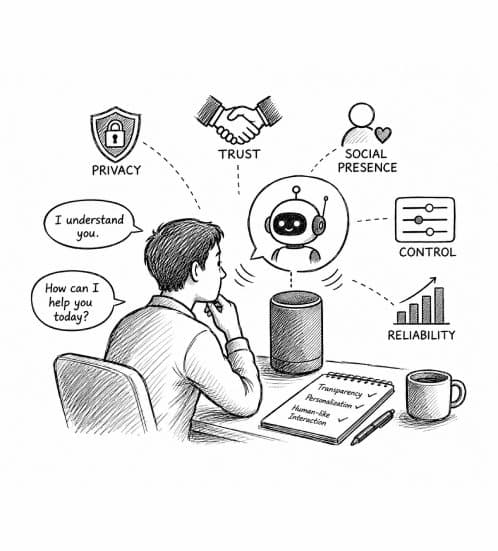
This literature-based line of work synthesizes research on how anthropomorphic design in conversational AI systems—including chatbots, voice assistants, and generative interfaces—shapes user perception, social presence, and interaction. The review maps how humanlike cues such as voice, persona, naming, visual embodiment, and conversational style are theorized to influence engagement, credibility, and sense of relationality, and traces where empirical findings converge or remain contested. It also examines trade-offs between familiarity and deception, and distills design implications for more reflective, human-centered conversational AI.
Visiting researcher at CHAI Lab under the supervision of Smit Desai.
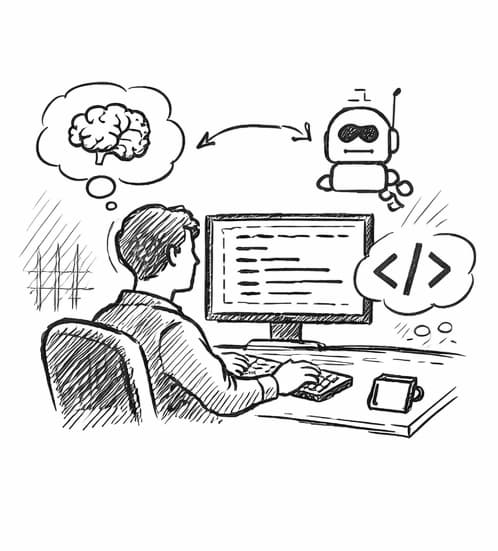
I investigate how AI-assisted systems transform human workflows, particularly in programming and creative problem-solving. In my work on AI-assisted (“vibe”) coding, I study how AI influences attention, task-switching, and novelty-driven behavior, surfacing cognitive trade-offs such as reduced friction versus increased fragmentation. This line of work asks how AI shapes expertise over time, and how we might design systems that better align with human cognitive processes.
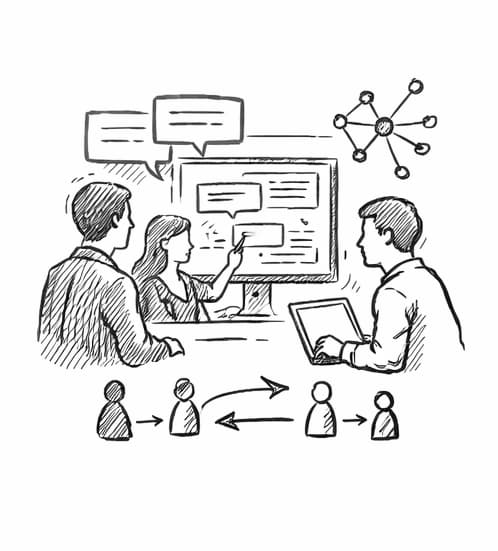
I study how people interact, collaborate, and construct meaning within digital systems. Rather than isolating individual usability, I focus on how interaction design scales into collective behavior and social dynamics. My work examines how system structures shape participation, coordination, and shared understanding, treating HCI as a way to understand how systems organize human activity at scale.

I investigate how misinformation spreads, how users interpret it, and how platform design influences belief formation and trust. My work focuses on sensemaking under uncertainty, how people evaluate, negotiate, and respond to conflicting information in socio-technical environments. I’m especially interested in how interface design and system dynamics can amplify confusion or support more resilient understanding.