When our paper was accepted to CHI 2026, three of us had graduated only eight months earlier. The other two had graduated four months earlier. None of us had years of publishing experience. The work had begun as our undergraduate thesis at BRAC University.
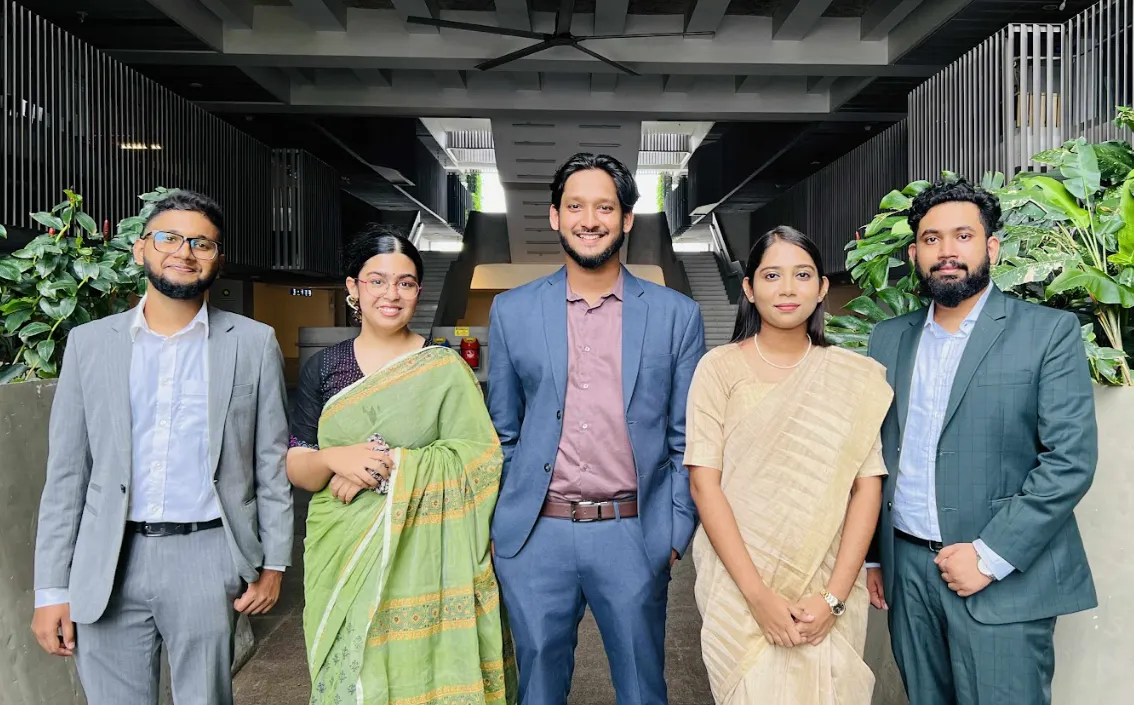
That thesis became The Digital Democracy Paradox, which was accepted to the ACM CHI Conference 2026. I still find that difficult to say without pausing. Two years earlier, I did not even know what CHI was.
But if I go back just two years, none of this was planned.
During my second year, my grades slipped and I was not doing well mentally. Money was a constant source of stress, so an internship seemed more sensible than a thesis. It offered a faster route to work and some financial stability. Research felt uncertain, and uncertainty was exactly what I was trying to avoid.
To finalize that decision, I went to talk to Salman Sayeed Khan, sir. He was busy with some work and was only half-looking at me while listening. I explained everything and finally said, "Sir, I want to do an internship instead of a thesis."
He didn't think twice.
He simply said, "No. You will do a thesis."
That was the entire discussion. I did not know it then, but his answer changed the direction of my degree.
When I finally realized that I would be doing a thesis, the first question that came to my mind was simple: what problem do I want to solve? I had always been drawn to real-world problems. Issues that directly affect people's lives, things that are visible, frustrating, and often ignored.
So I started looking inward. What is something I've personally struggled with?
The answer came quickly: government websites.
Long before I ever thought about doing a thesis, I had a recurring frustration. Whenever I came across a new government website, I would spend a significant amount of time trying to navigate it, usually out of necessity. And almost always end up frustrated. It became a pattern. Sometimes, out of curiosity (and irritation), I would open the Inspect Element or dig into the network tab, trying to understand what was going wrong behind the scenes. It wasn't just casual curiosity. It was a repeated experience of something clearly not working the way it should.
That curiosity eventually turned into a question: why are these systems so difficult to use?
I still remember the first time I went to discuss a thesis idea with my supervisor, Jannatun Noor, ma'am. At that point, I didn't even know that a field called Human-Computer Interaction existed. I had no idea that the kind of problem I was thinking about was part of a much larger global research community.
She was busy that day. She listened briefly, paused, and simply said, "Read CHI papers."
I walked out unsure whether she had even accepted me as a supervisee. Then I searched for "Kai paper." I did not know it was spelled CHI. I also did not understand that my frustration with government websites belonged to a field called Human-Computer Interaction. Among the students around me, AI, machine learning, cloud computing, and blockchain were much more familiar thesis areas. HCI was not.
Looking back, it's interesting to realize that we were already engaging with HCI-related problems without even knowing it. We were exploring usability, accessibility, and real-world user challenges, just without the vocabulary to define them. Things started to change when we took the HCI course under Jannat ma'am. That course gave structure to everything we had been intuitively thinking about. It introduced us to the theories, methods, and research that connected our scattered observations into a coherent field.
During a lab session, Jannat ma'am asked me to read Design Within a Patriarchal Society by Sharifa Sultana. It was my first HCI paper. Instead of presenting a complicated new system, it examined how patriarchy and other social conditions affect rural women's use of technology. I had not expected a computing paper to begin so firmly with people's lives.
Until then, I assumed research should end with a product. The paper showed me why choosing not to build can also be a responsible result, especially when a new system might reinforce an existing inequality. That idea stayed with me. Before proposing technology, I had to understand the setting in which people would use it.
We then spent a full year on the thesis. We changed direction, made mistakes, and learned how slowly a research question becomes precise. Somewhere in that year, research stopped feeling like a degree requirement. I began to enjoy it.
Our work focused on something very close to our everyday reality. In Bangladesh, many government digital platforms promise inclusion through e-governance. But when people actually try to use them, many struggle due to usability issues and a lack of digital literacy. So even though access exists, meaningful participation often does not. That gap became the center of our work. We called it the "digital democracy paradox."
After the thesis, we kept revising the work and decided to submit it to CHI. It went through repeated feedback and revision. When it passed the first round, we were still undergraduate students.
But getting the paper accepted was only part of the story. The next challenge was actually going there.
We decided to fund the trip ourselves. As someone who had just graduated and started working, spending almost all of my savings on a conference felt like a huge risk. I took some support from family and friends, but it was still a big decision. And the timing made it even more uncertain. There were global tensions because of war, flight uncertainties, and constant doubts about whether we would even be able to travel.
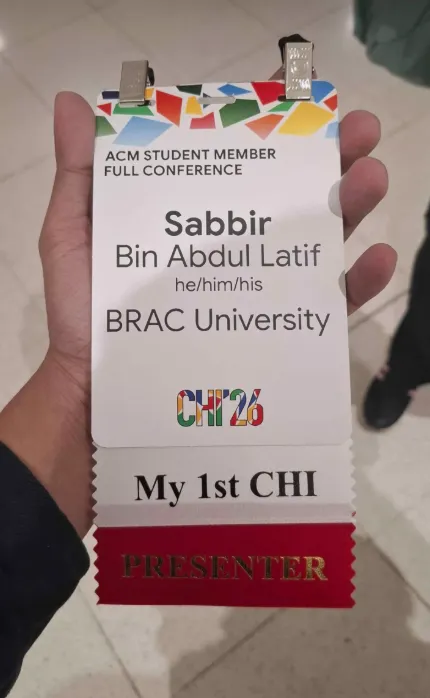
Still, we booked everything: tickets, visa, and even non-refundable accommodation. Even a few days before the trip, we weren't fully sure if it would happen. If it didn't, almost everything would have been lost. For someone at the start of their career, that wasn't a small risk.
The trip happened. Spending the money still frightened me, but I am glad I went.
At CHI, I met researchers whose names I had previously seen only on papers. I spoke with people from Korea, the United States, and elsewhere. What surprised me was how ordinary the conversations felt. People whose work had seemed distant were open, curious, and easy to approach.
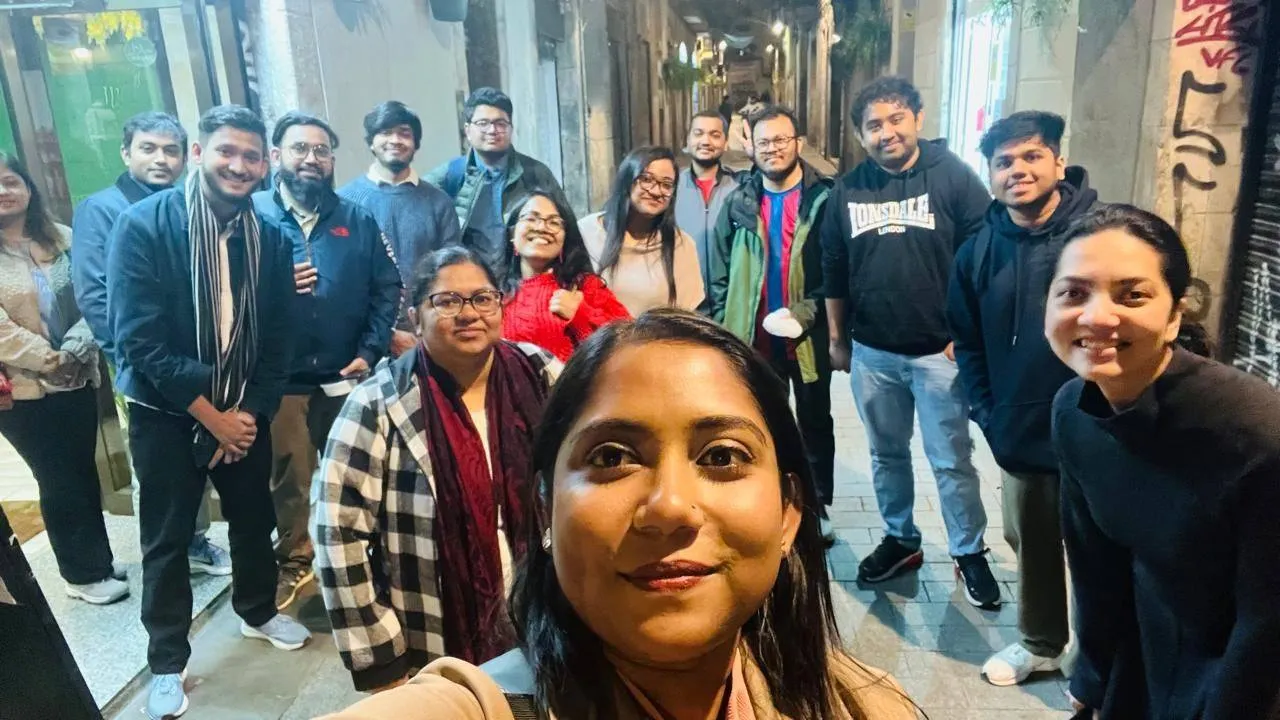
Pohela Boishakh fell during the conference. In Barcelona, the Bangladeshi HCI researchers gathered for what felt like a small reunion far from home. I finally met Ela apu, Mim apu, and others I had known only through their work. Many were based at universities abroad. Being in the same room made this research community feel less distant and, for me, more possible to join.
Sitting in sessions, I started to see things differently. Research wasn't just about building systems or writing code. It was about understanding people's struggles, their behaviors, their contexts, and designing technology that actually fits into their lives. That perspective changed how I see my own work.
I also noticed how present industry was. Practitioners attended sessions, joined discussions, and spoke with early-stage PhD students about opportunities. I had not understood how closely HCI research and industry could be connected. That connection is much harder to see in Bangladesh.
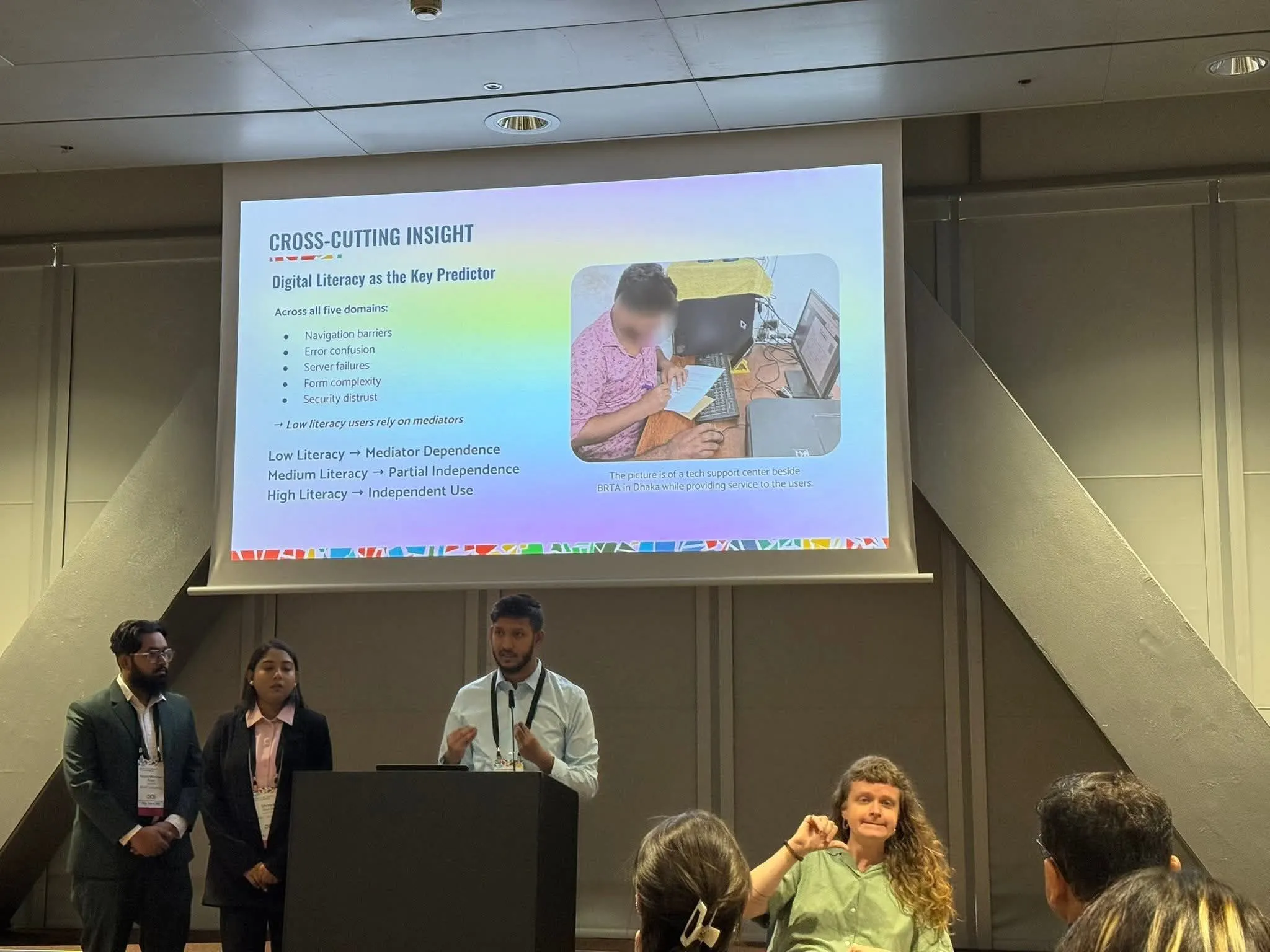
Most people we met were PhD students, researchers, or professors. Three of us had just graduated, and we were the only Bangladeshi attendees who had travelled directly from Bangladesh. People were surprised when they heard that. Their reaction showed me how unusual this path still is for students from our universities.
There are a few people I cannot leave out of this story. Anika Priodorshinee Mrittika ma'am gave us so much time during the thesis that we joked she was the sixth member of the group. Our supervisor, Jannat ma'am, kept reviewing the work despite her schedule. Her short, direct comments often sent us back to revise an entire section.
And of course, that one line from Salman Sayeed Khan sir, "No, you will do a thesis," still echoes in my mind.
Right now, I'm working in the industry, and I genuinely enjoy what I do. But this journey introduced me to something I didn't even know I was looking for. A space where technology meets human stories. A space where my interest in social science and computing finally connects. I've started working on research again, this time in Human-Centered AI, and slowly thinking about the next steps in this path.
Students in Bangladesh do not need a perfect profile before they begin research. We certainly did not have one. We had a problem we had experienced ourselves, teachers who pushed us, and enough patience to keep revising the question.
I still think about the short conversation that started it. I went to Salman sir to avoid a thesis. He barely looked up from his work and said, "No. You will do a thesis." Two years later, I was in Barcelona presenting one.